Industry-Funded Research Downplayed Sugar Health Effects
The sugar industry like too many others has used obfuscation and faux science to obscure the health effects of its product.

The sugar industry like too many others has used obfuscation and faux science to obscure the health effects of its product.
The U.S. Department of Agriculture (USDA) approved the Okanagan Specialty Fruits’ genetically engineered Arctic Apples.
In a muddled attack on the Center for Media and Democracy and those who are concerned about produce grown in sewage sludge, "The Salt," parroted sewage sludge industry PR and misled readers.
-- by Rebekah Wilce and Mary Bottari
Since the 2008 financial crisis, cash strapped states have accelerated the outsourcing of America in hopes of delivering the same services more cheaply. "Desperate government is our best customer," said one executive specializing in infrastructure purchases.
My friend Jim, a farmer, jokes about bringing a bowl of manure and a spoon to the farmers' markets where he sells his beef. "My beef has no manure in it, but you can add some," he'd like to tell his customers.
I'm sure you'd pass on manure as a condiment. But unless you're a vegetarian or you slaughter your own meat, you may have eaten it. And if the USDA moves forward with its plan to make a pilot program for meat inspection more widespread, this problem can only get worse.
You might use nanotechnology in the sunscreens you squirt or lather on your kids. You might lick your lips and taste it in your favorite lip-gloss. You might even eat it in your Jell-O pudding. But is it safe?
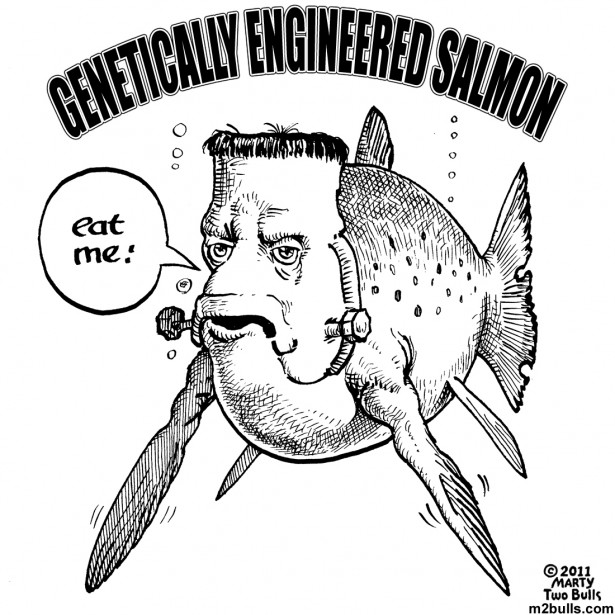 The extended comment period on the U.S. Food and Drug Administration (FDA) review and approval of AquAdvantage genetically engineered (GE) salmon ends April 26. As more comments flood in, the Center for Food Safety (CFS) reports that documents disclosed through a Freedom of Information Request (FOIA) "raise serious questions about the adequacy of the FDA's review of the AquAdvantage Salmon application."
Bills were introduced in the Iowa and Illinois state senates last week that would require genetically engineered (GE) foods to be labeled. Iowa's bill would require labeling if a food contains more than nine-tenths of a percent GE ingredients, whereas Illinois' bill has a one percent threshold.
The World Trade Organization (WTO) issued a final ruling today against the U.S. country-of-origin labeling (COOL) law. This popular pro-consumer policy, which informs shoppers where meat and other foods were raised or grown, enjoys the support of 93% of Americans, according to a 2010 Consumers Union poll. Now Congress must gut or change the law to avoid the application of punitive trade sanctions.
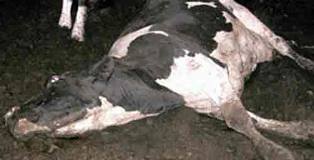 A downer cow at a California dairy was recently found to be infected with an "atypical" strain of "bovine spongiform encephalopathy" (BSE), or "mad cow" disease. There has been some significant media coverage of the case, and the USDA wants the media to know they are not pleased.
The U.S. Department of Agriculture (USDA) press secretary, Courtney Rowe, issued a memo saying there were an, "unfortunate amount of misleading articles meant for our public."

Center for Media and Democracy (CMD)
520 University Ave, Ste 305 • Madison, WI 53703 • (608) 260-9713
CMD is a 501(c)(3) tax-exempt non-profit.
© 1993-2025