ALEC Helps Philip Morris Block Plain Packaging Tobacco Rules
"Last Week Tonight with John Oliver" didn't mention ALEC's role in pushing Philip Morris' anti-regulatory agenda globally."

"Last Week Tonight with John Oliver" didn't mention ALEC's role in pushing Philip Morris' anti-regulatory agenda globally."
Before the Heartland Institute became famous for its leading role in climate change denial, the group spent many years working to defend the tobacco industry. Just as the group is now known for its over the top attacks on climate scientists, Heartland once played a large role in criticizing public health experts and others calling attention to the dangers of cigarette smoking.
The State Policy Network (SPN), a web of right-wing "think tanks" in every state across the country, has close ties with the tobacco industry. When tobacco companies like Reynolds American or Altria/Philip Morris want to avoid tobacco taxes and health regulations, reports by SPN groups in many states can help inspire local resistance.
Think Wisconsin Governor Scott Walker and special interests supporting him spent a lot in the Wisconsin recall race, at $45 million? Well, tobacco companies spent even more to defeat the ballot measure to raise California's cigarette taxes. How much? $47 million.
The ballot measure, Proposition 29, would have raised California's cigarette tax from its current 87 cents a pack -- half the national average -- to $1.87 a pack. This would still only have been the 16th highest cigarette tax in the country. The revenue created would have financed cancer research and smoking prevention programs.
Submitted by Anne Landman on
 In the 1970s, Nordic countries were among the first to adopt policies against tobacco, like bans on cigarette advertising, health warning labels and smoke-free laws, but U.S.-owned tobacco companies, and particularly Philip Morris, makers of Marlboro, became concerned such polices could spread to America and other developed countries where they sold cigarettes. Also, Europe's first product liability case against the tobacco industry occurred in Finland in 1988, when a smoker sued several companies claiming their products caused his illness, causing even more concern for global tobacco companies. To help escape product liability claims, Nordic tobacco companies -- like Amer Tobacco and Rettig, which distributed Philip Morris and R.J. Reynolds brands, respectively -- long claimed to be ignorant of, and denied participation in the multinational tobacco companies' global strategies to undermine anti-tobacco policies, but industry documents reveal the truth -- that smaller Nordic tobacco companies did, in fact, participate in the multinational companies’ long-time conspiracy to deny the health dangers of smoking and undermine anti-tobacco policies, helping delay key effective tobacco control measures, and particularly smoke-free laws, for years.
Republican presidential candidate Herman Cain's new internet ad features a tight head shot of his campaign's "chief of staff," Mark Block, telling viewers how great Cain will be for the country and how much confidence he has in Cain. In the ad, Block looks directly at the camera, says, "We've run a campaign like nobody's ever seen." Then, at the 40-second mark in the 56-second political spot, Block unexplicably takes a long, prominent drag from a lit cigarette and then exhales, blowing the smoke directly at the viewer. The ad highlights Cain's connections to the tobacco industry, and Block's position in the campaign belies Cain's connections to David Koch. Until earlier this year, Block was the long-time leader of the Wisconsin arm of the David Koch-funded astroturf group, Americans for Prosperity (AFP), following a scandal that barred him from electoral politics for a time. A number of Cain's other aides have also worked for AFP, and Cain's old work and email addresses used to be with the Koch group. But what's the cigarette connection?
 The American Legislative Exchange Council (ALEC) is an influential, under-the-radar organization that facilitates collaboration between many of the most powerful corporations in America and state-level legislative representatives. Elected officials then introduce legislation approved by corporations in state houses across the U.S., without disclosing that the bills were pre-approved by corporations on ALEC task forces.
ALEC has had a long relationship with the tobacco industry. To explore this relationship, we studied publicly-available tobacco industry documents found in the Legacy Tobacco Documents Library (LTDL), an electronic archive created by the University of California San Francisco that contains 70+ million pages of previously-secret, internal tobacco industry documents obtained in the discovery phases of the 46 state attorneys general lawsuits against the tobacco industry. Those lawsuits were resolved in 1998. The documents were made public as a term of the 1998 Master Settlement Agreement between the states and the tobacco industry. Before now, ALEC documents in this database have not been a major focal point.
At the end of May, as the Wisconsin Joint Finance Committee (JFC) worked day after day and late into the night voting on changes and amendments to the state budget bill, Joint Finance Co-Chair Alberta Darling (R-River Falls) quietly slipped a small provision into the massive budget bill that has received little attention.
Submitted by Anne Landman on
 Starting September, 2012, the U.S. Food and Drug Administration (FDA) will require new, updated health warnings on cigarettes. The 25 year-old, plain-text Surgeon General warnings will be out, replaced with updated, straightforward messages like "WARNING: Tobacco smoke causes fatal lung disease in nonsmokers," "WARNING: Cigarettes are addictive" and "WARNING: Cigarettes cause fatal lung disease." The text will be much larger than the old Surgeon General's warnings, and will be accompanied by powerful pictures, like photos of corpses, diseased lungs and oral cancer. To choose the warnings, FDA reviewed relevant scientific literature, considered over 1,700 public comments and performed a survey of 18,000 citizens. The new warnings will be rotated to keep them fresh. They will cover the top 50 percent of the front and rear panels of cigarette packs, and in cigarette ads, the warnings must occupy at least 20 percent of the upper portion of each ad. The new warnings were authorized by the Family Smoking Prevention and Tobacco Control Act that President Obama signed in 2009.
Submitted by Anne Landman on
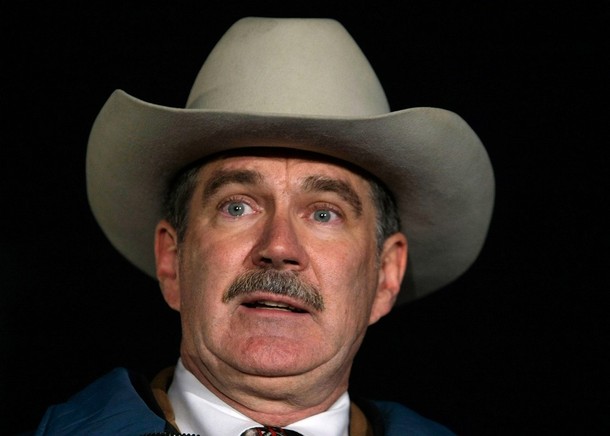 The House Appropriations Committee voted to approve an amendment introduced by Rep. Denny Rehberg (R-Montana) that would immunize the tobacco industry against U.S. Food and Drug Administration (FDA) rules stopping them from making cigarettes more addictive and marketing them to children. Among other things, Rehberg's amendment restricts FDA's authority to regulate the use of menthol in cigarettes. An FDA Scientific Advisory Committee concluded last March that menthol added to cigarettes makes them more attractive of children, increases the number of kids who start to smoke and reduces the number of smokers who can successfully quit. The Rehberg amendment also blocks FDA from regulating ammonia in cigarettes, which tobacco companies add to speed the the bodies' absorption of nicotine. Rehberg's amendment is aimed at weaking the landmark 2009 law giving FDA authority over tobacco products. Members of the Appropriations Committee who voted in favor of Rehberg's amendment together accepted $289,927 in tobacco industry campaign contributions in the last election cycle compared to just $10,000 taken by those who opposed the amendment -- a 20-fold difference.

Center for Media and Democracy (CMD)
520 University Ave, Ste 305 • Madison, WI 53703 • (608) 260-9713
CMD is a 501(c)(3) tax-exempt non-profit.
© 1993-2024