
Submitted by Anne Landman on
Actress Suzanne Pleshette's recent death from "respiratory distress" was sad. Most of the articles about it briefly mention that she had been fighting lung cancer, but fail to mention that she had been a cigarette smoker in the past. Cigarette smoking is the single biggest cause of lung cancer.
It is rarely discussed, but tobacco has taken an extraordinarily heavy toll on Hollywood. The list of beloved celebrities killed by smokers' diseases is huge, and growing: George Harrison, Johnny Carson, Dana Reeve, Yul Brynner, Lucille Ball, Walt Disney, Nat King Cole, Joe DiMaggio, Michael Landon, Sammy Davis, Jr., Dean Martin, Betty Grable, and Babe Ruth to name just a few. Despite this, the failure to mention a person's smoking history in obituary columns is the norm in celebrity deaths. In just one glaring example, a four page obituary about the 2005 death of prominent news anchor Peter Jennings published by his own network, ABC, fails to mention the contribution that smoking made to Jennings' tragic and untimely death. A CNN's column about Jennings' death didn't mention it either. Something is up when major news organizations omit any mention the single most prominent cause of the death of a renowned news anchor.
Big Screen Smoking
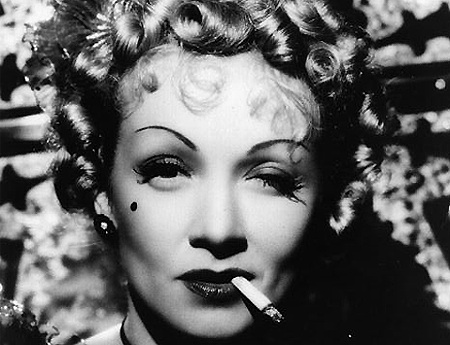 Smoking has always been common in the entertainment industry, and Hollywood has a track record of promoting smoking. Lois Lane, a reporter who never smoked throughout her 40 years in Superman comics, was suddenly shown smoking on-screen in the movie Superman II. Tobacco industry documents reveal that Sylvester Stallone signed a contract with Brown & Williamson to plug their brands in five of his movies in exchange for $500,000. A study published in the American Journal of Public Health in 2004 shows that on-screen smoking rates in movies have now returned to rates seen in the 1950s, even though far fewer people smoke now than in the 1950s. Given that smoking was perceived as a more normal activity when Suzanne Pleshette came of age, her smoking wasn't unusual. As the years went on, she was able to quit. But the harm had already been done.
So why is the media so reticent to mention the part cigarettes play in killing off so many beloved public figures? Probably because of the cruel but popular belief that people who suffer from lung cancer and emphysema have caused their own diseases. Reporters don't want to be perceived as blaming the victim.
Jacking Up Nicotine
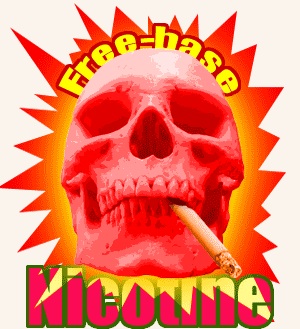 This damaging and misplaced stigma, however, ignores some important information that has emerged from tobacco industry documents: cigarette companies chemically engineer their products to maximize their addictive qualities. In the mid-1970s, cigarette companies began freebasing nicotine by adding ammonia to tobacco. Freebasing is a chemical process that makes smoke slightly more alkaline, resulting in nicotine being converted to a form that is more rapidly absorbed by the body. It gives the smoker a faster, harder "kick" after lighting up.
Tobacco companies that first employed this chemical change, like Philip Morris, won a bigger market share for their products. This did not go unnoticed by competitors, who eventually discovered the change and started freebasing nicotine, too. Ultimately, it became state-of-the-art in cigarette manufacturing. Freebasing is the same chemical process that drug dealers use to turn cocaine into crack. Tobacco companies even use the same chemical that drug dealers use to freebase cocaine, ammonia. But they neglected to ever make consumers aware of this subtle, but powerful, chemical change in cigarettes.
By comparison, heroin, a notoriously addictive illegal drug that has killed a tiny fraction of the celebrities and others killed by cigarettes, doesn't have this type of chemical engineering, since it doesn't have wealthy corporate research and development departments working to make them more addictive. This under-the-radar chemical engineering, and its ultimate effect on smokers of making it harder to quit, is one reason why it is unfair to blame smokers for their diseases.
Another reason why media outlets are hesitant to mention smoking as a contributor to celebrity deaths may be that big media conglomerates also now own magazines and other media outlets that still accept advertising from tobacco companies, which themselves own numerous subsidiaries that make non-tobacco products. To repeatedly highlight the part that smoking plays in killing well-known public figures could result in a loss of advertising dollars. Tobacco industry documents show that tobacco companies used to get upset when newspaper publishers placed cigarette ads next to obituary columns and funeral notices, back when most newspapers still accepted cigarette ads.
Read Between the Lines
Reporters may also lack the authoritative documentation they need to back up statements that smoking contributed to a person's death. Most death certificate forms don't have an easy way for doctors to indicate the part tobacco played in contributing to someone's death. Industry documents show that tobacco companies had a hand in this as well. The Tobacco Institute worked quietly behind the scenes to prevent legislation that would allow states to place a check box on death certificates allowing doctors to indicate whether a deceased person had used tobacco. Such a check box would have made it far easier to accumulate data regarding the number of people killed by cigarettes, and would have facilitated tabulation of the overall contribution of cigarettes to the death rate in society. This small change on death certificates posed a distinct threat to tobacco companies. The result is that information quantifying cigarette deaths is more difficult to accumulate than it might be if the cigarette industry not interfered with what can be put on death certificates.
Whatever the reason that smoking is not openly discussed in celebrity deaths, the result is a chronic underreporting of the seriousness of the damage this product is doing to our population. Every celebrity who dies from smoking and about whom we cover up that information is a missed opportunity to educate the public about the toll cigarettes take on society. We need to more clearly define smoking's contribution to the death rate, so that the living can more clearly see the urgency in minimizing tobacco use.
 Printer-friendly version
Comments
Marilyn Jackson replied on Permalink
Dana Reeve
susana9 replied on Permalink
Dana Reeves
Anonymous replied on Permalink
18% of lung cancer occurs in
Elliott Bettman MD replied on Permalink
Dana Reeve and Tobacco
Rich Scales replied on Permalink
the point is...
Rita Roach replied on Permalink
Dana Reeve
geneb5 replied on Permalink
Dana Reeve's life in smoky places
xbjllb replied on Permalink
There is another reason reporters don't talk about smoking
Thom replied on Permalink
you know, who really cares?
LADidier replied on Permalink
Respns to avowed smoker
Pages