
When Recycling Isn't: Lessons from a Nuclear Industry Conference
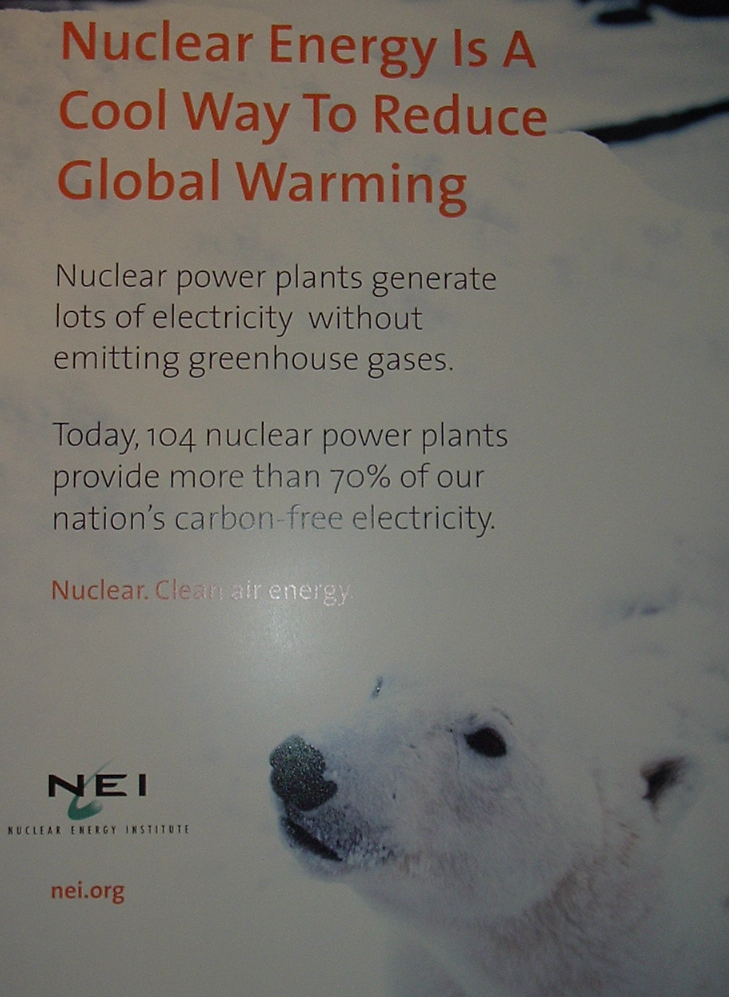 I learned many things at the Nuclear Energy Institute's (NEI's) annual meeting, but perhaps none more surprising than this: When nuclear power executives discuss the state of their industry, they highlight many of the same issues as their environmentalist opponents.
Of course, the emphasis and even the language are different. But presenters at the "Nuclear Energy Assembly," held in Chicago from May 5 to 7, discussed financing for new nuclear plants, nuclear waste storage and nuclear weapons proliferation concerns.
Nuclear power opponents argue that the industry shouldn't expect or need government support, some fifty years into its existence. In a hotel conference room populated mostly with gray-suited older white men, industry executives repeatedly called for an expansion of federal loan guarantees for new nuclear plants.
Early on in the conference, NEI president and CEO Frank L. "Skip" Bowman said, "We use loan guarantees in this country to support ship building, steel making, student loans, rural electrification, affordable housing, construction of critical transportation infrastructure, and for many other purposes. Please don't tell me that America's electric infrastructure is any less important." He added, "I wish someone would tell me when the word 'subsidy' became a slur, a four-letter word. ... What is there of value in American life that is not subsidized, to some extent?"

 But the pundits weren't just selling government talking points. As
  While the U.S. economy has been slowing, lobbyists have been making more than ever.
 As gas and food prices rise, so does scrutiny of industry profits. But "food and energy companies have learned a lot since the 1970s about how to deal with public indignation," writes George Anders. In 1980, "Congress hit the energy industry with a windfall profits tax" that lasted until 1988.
 As a manufacturer of gas/electric hybrid cars,